
On paper, a solar array often looks perfectly balanced.
Attachment locations are evenly spaced, rails follow predictable layouts, and structural loads appear straightforward. The reality on a rooftop is usually more complicated.
Roof framing varies. Obstructions influence attachment placement. Mechanical equipment limits routing options. Structural conditions can change across different sections of the roof. This is why attachment location decisions are often more important than they initially appear.
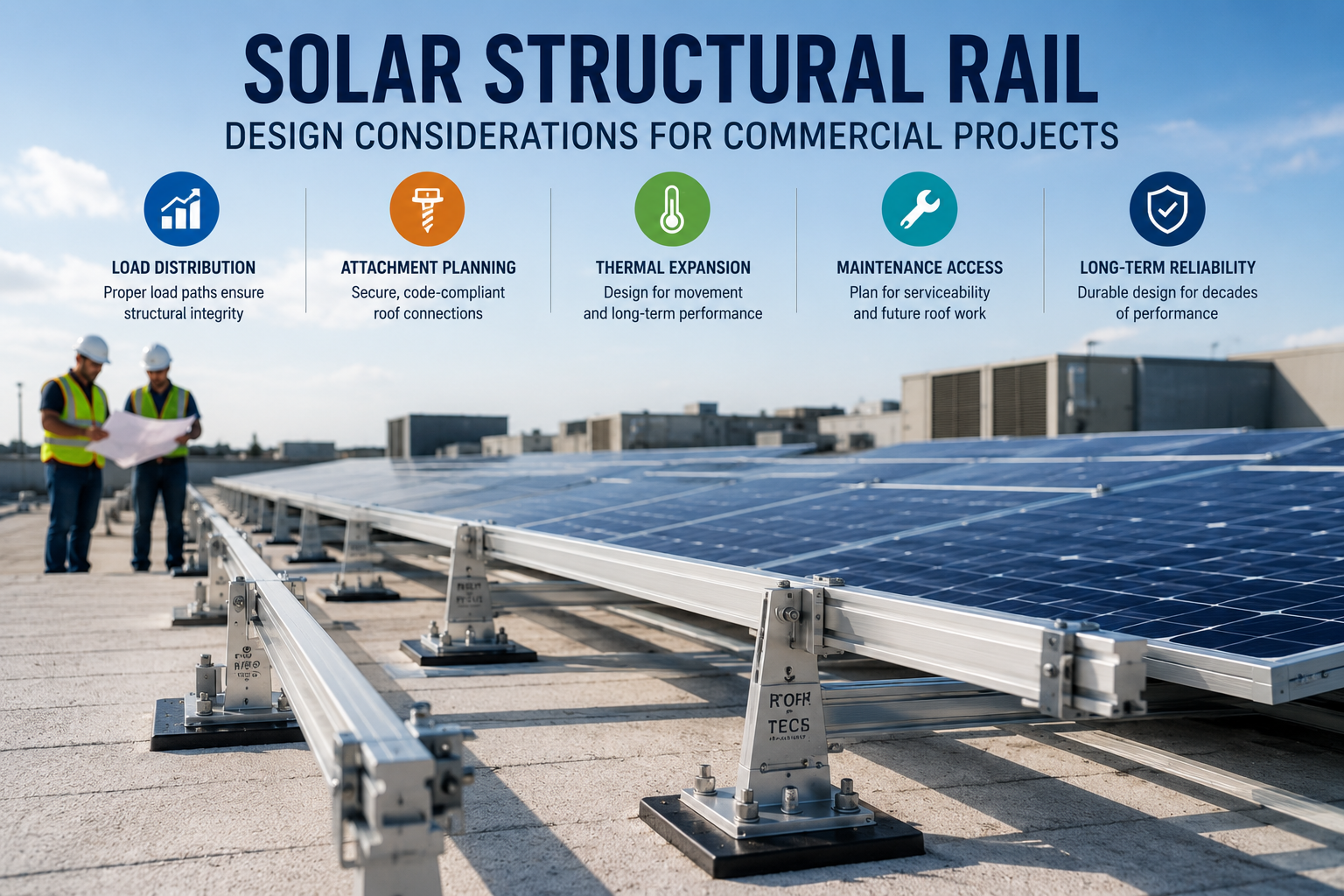
In many rooftop solar projects, load distribution is influenced not only by the mounting hardware itself but also by the placement of attachment points within the overall system.
Load Path Fundamentals: Start at the Roof Structure
Every rooftop solar system transfers loads through a structural path.
That path typically begins with:
Solar modules
Mounting rails
Attachment hardware
Roof attachments
Structural framing members
Each connection point contributes to the distribution of loads across the structure.
When attachment locations are planned effectively, loads can be transferred more consistently throughout the mounting assembly.
When attachment placement is constrained by roof conditions or structural limitations, additional engineering considerations often become necessary.
This is one reason attachment planning receives significant attention during commercial and residential system design.
What Engineers Consider When Selecting Attachment Locations
Attachment placement is rarely determined by module layout alone.
Experienced designers evaluate multiple variables before finalizing attachment positions.
Structural Framing Alignment
Attachment locations should align with structural members capable of supporting design loads.
Load Distribution Across the Array
Even load transfer helps reduce localized stress concentrations within the mounting system.
Roof Geometry
Penetrations, valleys, ridges, and rooftop equipment may influence attachment placement.
Environmental Loading
Wind and snow conditions often affect attachment spacing and overall system design.
Installation Practicality
Attachment layouts should support efficient installation while maintaining engineering requirements.
The objective is to balance structural performance with real-world rooftop conditions.
Why Attachment Placement Affects Overall System Performance
Attachment hardware does more than secure the system to the roof.
It influences how forces move throughout the mounting structure.
Poorly distributed attachment locations can contribute to:
Uneven load transfer
Increased rail stresses
Additional installation adjustments
Reduced layout flexibility
More complex structural coordination
By contrast, well-planned attachment locations typically support more predictable structural performance and installation consistency.
This becomes increasingly important on projects with larger array footprints or complex rooftop conditions.
How RT Mini II Supports Attachment Planning
Many contractors evaluating a self-flashing base mount solution focused on more than just waterproofing.
Attachment planning often involves balancing:
Structural requirements
Roof protection
Installation efficiency
Long-term reliability
RT Mini II is frequently considered as part of that evaluation process because attachment systems influence both structural performance and roof integration.
For engineering teams, the goal is not simply selecting an attachment component.
The goal is to support a mounting strategy that maintains load distribution, structural integrity, and long-term rooftop performance.
Engineering Evaluation: Looking Beyond Attachment Count
One common misconception is that more attachment points automatically create a better system.
In reality, attachment quality and placement often matter more than quantity alone.
An effective solar roof attachment system distributes loads through a coordinated structural design rather than relying solely on additional attachment locations.
Experienced engineers evaluate:
Structural load paths
Attachment spacing
Framing conditions
Environmental loading requirements
Long-term system performance
Organizations such as the Solar Energy Industries Association (SEIA) continue to emphasize quality system design and installation practices as important contributors to solar project reliability.
Understanding load distribution principles helps project teams make more informed attachment decisions while supporting long-term system performance.
Why Are Attachment Locations Important for Load Distribution?
Attachment locations are important because they influence how structural loads are transferred from the solar array into the building structure. Proper attachment placement helps distribute loads more consistently, supports structural performance, and contributes to the long-term reliability of the mounting system.
Key Engineering Takeaway
Attachment locations are often viewed as installation details, but they play a central role in structural performance.
A well-designed solar roof attachment system depends on more than strong hardware. It depends on how attachment points work together to distribute loads, maintain alignment, and ensure long-term reliability throughout the mounting assembly.
Frequently Asked Questions
What is a solar roof attachment system?
A solar roof attachment system consists of the hardware and structural connection points used to secure a solar array to a building.
Why does attachment location matter?
Attachment placement influences load transfer, structural performance, installation efficiency, and long-term system reliability.
How do engineers determine attachment locations?
Engineers evaluate framing alignment, environmental loads, roof geometry, attachment spacing, and structural requirements.
Can attachment placement affect rail performance?
Yes. Attachment locations influence load distribution throughout the mounting assembly and can affect rail stresses and alignment.
How does RT Mini II fit into attachment planning?
RT Mini II supports roof attachment strategies that consider both roof integration and structural performance.
What is load distribution in rooftop solar systems?
Load distribution refers to how forces are transferred throughout the mounting structure and into the building's structural framing.



Write a comment ...