
A solar installation can be perfectly designed on paper and still run into problems the moment the crew gets on the roof.
Ask installers where unexpected delays usually come from, and the answer is rarely the solar module itself. More often than not, the issue starts with small details that don't receive much attention during planning.
A rail sits slightly out of alignment.
An attachment location needs adjustment.
A roof surface isn't as uniform as expected.
Suddenly, a component that looked insignificant on a material list becomes important.
This is often where the solar L-foot mounting bracket enters the conversation.
Most property owners never see it. Many project discussions barely mention it. Yet it plays a critical role in connecting the mounting system together and helping installers adapt to real-world rooftop conditions.
What Usually Gets Missed During System Planning
During project planning, most conversations revolve around major components.
Teams discuss:
Module selection
Inverter sizing
Rail layouts
Production estimates
Structural calculations
The smaller hardware components rarely receive the same level of attention.
That makes sense from a planning perspective. Larger components drive system design.
However, installation crews often discover that project efficiency depends just as much on the quality of connection points as it does on the size of the structural components themselves.
A mounting system is only as effective as the hardware connecting it together.
The Day Installation Slows Down
Most rooftop projects encounter small adjustments. That's normal.
Attachment locations may vary slightly from original layouts. Roof conditions can differ across sections of the building. Structural members are not always positioned exactly where drawings suggest.
When these conditions appear, installers rely on mounting hardware to help maintain alignment and create a workable installation path.
Without sufficient adjustability or integration between components, crews may spend additional time making corrections that were never anticipated during planning.
This is one reason experienced contractors pay close attention to hardware selection before installation begins.
The impact isn't always dramatic. But it can influence installation efficiency throughout the project.
Why Attachment Hardware Influences More Than Strength
Many people associate mounting hardware primarily with structural support.
While strength is important, experienced installers often evaluate additional factors.
Hardware can influence:
Rail alignment
Installation flexibility
Attachment spacing adjustments
Rooftop adaptability
Long-term system consistency
These considerations become increasingly important on commercial rooftops where layout conditions can change across different roof sections.
Hardware that supports efficient installation often helps crews maintain consistency without introducing unnecessary field modifications.
What Experienced Installers Notice
Crews rarely remember hardware that performs exactly as expected.
They remember hardware that creates problems.
A connection point that requires repeated adjustments.
A component that slows alignment.
A mounting assembly that becomes difficult to work with when rooftop conditions change.
Over time, installers develop a strong appreciation for hardware that simplifies the process rather than complicating it.
This is one reason many contractors evaluating a solar panel mount system look beyond rails and attachments and examine how the supporting hardware integrates into the overall assembly.
The goal is not simply to complete the installation.
The goal is to create a system that remains stable, serviceable, and reliable throughout its operational life.
Looking Beyond the Rail System
When people evaluate solar mounting systems, attention often goes directly to visible structural components.
However, long-term performance depends on how those components work together.
Small hardware elements help bridge the gap between design and installation reality.
They support alignment, accommodate rooftop variation, and contribute to overall installation quality.
This is particularly important on projects exposed to changing weather conditions, thermal movement, and years of operational wear.
Organizations such as the Solar Energy Industries Association (SEIA) continue to emphasize quality installation practices and system reliability as key contributors to long-term solar project performance.
Why Is a Solar L-Foot Mounting Bracket Important?
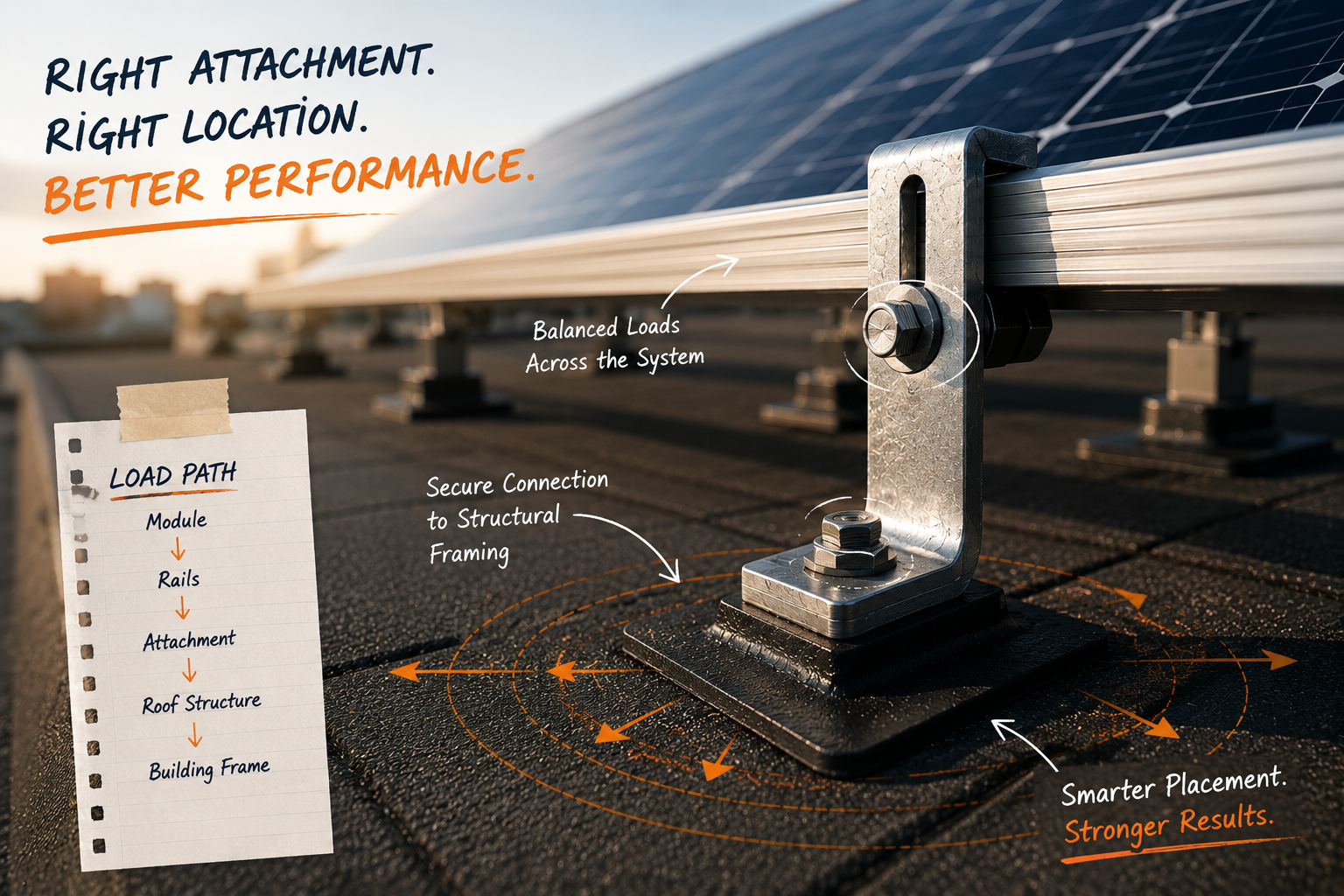
A solar L-foot mounting bracket is important because it helps connect roof attachments to mounting rails while supporting alignment, installation flexibility, load transfer, and long-term system reliability. Although it is a relatively small component, it plays an important role in the overall performance of the mounting system.
Key Takeaways
The most important component of a solar project is not always the most visible one.
While modules, rails, and attachments receive much of the attention, small hardware components frequently determine how smoothly an installation progresses once crews are on the roof.
A solar L-foot mounting bracket may appear minor compared to larger structural components, but its role in alignment, adaptability, and installation quality makes it an important part of a reliable rooftop solar mounting system.
Frequently Asked Questions
What is a solar L-foot mounting bracket?
A solar L-foot mounting bracket is a hardware component that connects roof attachments to solar mounting rails.
Why do installers pay attention to mounting hardware?
Small hardware components often influence installation efficiency, alignment, and long-term system reliability.
Can mounting hardware affect project timelines?
Yes. Hardware that simplifies alignment and installation can reduce field adjustments and improve workflow efficiency.
Does an L-foot bracket contribute to structural performance?
Yes. It helps transfer loads between mounting system components while maintaining a secure connection.
What should contractors evaluate when selecting mounting hardware?
Contractors typically evaluate compatibility, adjustability, durability, corrosion resistance, and installation efficiency.
Why do small mounting components matter in solar projects?
Because they help connect major structural elements and often influence how efficiently the entire mounting system can be installed and maintained.

Write a comment ...